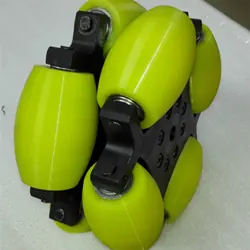
Omni wheels
350mm Omni Wheel MU350
350mm Omni Wheel MU350 is an industrial omni wheel for robotics and transfer systems.
View productApplication guide
Industrial omni wheels are used when a product, cart or platform needs to move smoothly in more than one direction. They are common in transfer tables, conveyor side guides, sorting mechanisms, robotic carts and positioning devices.
The main advantage of an omni wheel is low resistance in a secondary direction. This helps products or platforms transfer sideways without requiring complex mechanical guidance.
In conveyor and table applications, omni wheels can support movement, alignment and repositioning while keeping the system mechanically simple.
Industrial omni wheel selection depends on contact pressure, roller wear, bearing arrangement and the surface that touches the wheel. A wheel used under a carton, metal frame or robot chassis may need different roller and body construction.
For continuous duty, review heat, vibration, contamination and maintenance access. A larger or stronger wheel can be useful when the contact load is concentrated.
MECAWHEEL can help review how the wheel will be mounted in the frame or drive system. Share shaft size, bearing support, spacing, fixing method and available width.
If a standard omni wheel does not fit the assembly, a hub, spacer or coupling option may provide a practical integration path.
Recommended products
Review products close to this use case, then contact MECAWHEEL to confirm load, diameter and mounting requirements.
Omni wheels
350mm Omni Wheel MU350 is an industrial omni wheel for robotics and transfer systems.
View product
Omni wheels
254mm Omni Wheel MU254 is an industrial omni wheel for robotics and transfer systems.
View product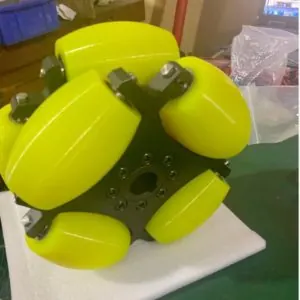
Omni wheels
203mm Omni Wheel MU203 is an industrial omni wheel for robotics and transfer systems.
View product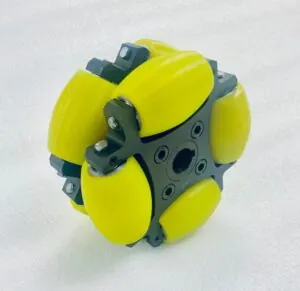
Omni wheels
152mm Omni Wheel MU152 is an industrial omni wheel for robotics and transfer systems.
View productFAQ
They are used in transfer tables, conveyors, carts, positioning systems, robot platforms and fixtures that require low lateral resistance.
Choose based on the contact surface, load, noise target, wear expectation and whether floor marking is a concern.
Yes. They are often used as passive rollers or support wheels where sideways movement should remain smooth.
Send load, diameter, mounting and operating conditions. MECAWHEEL will help review a practical configuration.